
Learning Consultancy Partnership
Welcome to the Learning Consultancy Partnership. We are a team of highly qualified and extremely experienced business consultants with an impressively diverse range of business backgrounds. Our breadth of experience put us in the perfect position to advise you about how best to run your organisation, making your company more efficient, more effective and more successful overall.
We’re proud of the difference that we’ve been able to make to countless businesses across a range of sectors. Thanks to our expertise, we have helped a diverse cross-section of firms to excel within their individual industries. We offer a clear benefit to clients and thanks to the diversity, enthusiasm and, above all, extensive experience of our consultancy team, we have achieved tangible results time and time again.
What Can You Expect of Our Consultancy Team?
When you choose the Learning Consultancy Partnership as your preferred team of business consultants, you can expect to find enthusiastic coaches and consultants who have the interests of your company at heart. With a minimum of 15 years’ business experience each, you can depend on each and every one of our skilled team to channel their enthusiasm and proven talents into the improvement of your organization.

Whatever results you’re hoping to achieve through our consultancy, you can be confident that the diverse range of business backgrounds, including SME, blue-chip, public and private sector companies, shared by our consultants will be sufficient to turn your company around.
We believe that our team are the greatest asset we can offer you, and we’re here to ensure that your team will be yours. You can rest assured that we have received consistently positive feedback which only goes to show the significant benefits of our work for a wide range of businesses.
Our Vision

Here at the Learning Consultancy Partnership, we have a mission to help every business to grow and thrive. We want exactly what you want for your own company – an organisation which is filled with a happy, productive, and, above all, highly motived workforce which puts the needs of the business at the forefront of everything they do.
We believe in the value of your employees, and we have come to understand through years of hands-on experience that they are any company’s greatest asset. It is our mission to help you to capitalise on this asset to the advantage of your business. With successful leadership in place, any company can achieve the greatest success.
Our Values
When you choose the Learning Consultancy Partnership as your preferred business consultancy, you will benefit from our work ethics and values. We are here to work closely in conjunction with both you and your team, taking the time to listen to your needs and requirements actively and to come to understand your organisation and what drives it fully. We are here to help you to achieve the goals that you seek and to make suggestions of our own to help your organisation to operate more efficiently.
You can rest assured that we will always be upfront and transparent with respect to our costs and fees. We will let you know exactly how we plan to help your organisation so that you can measure our results against tangible goals.
Why Is Business Consulting So Important?
Running any business today can be extremely challenging. Whether you are running a small-scale B2B enterprise or whether you are running a retail organization, keeping operations running smoothly is never as easy as it seems. For those who are at the helm, the challenges are numerous and sometimes overwhelming.

Perhaps your business is struggling to compete in a competitive marketplace? Or perhaps you feel that your company is coasting and should be doing more to push its advantage against its rivals? There are many ways in which a business consultancy firm can help you to achieve your goals.
The true importance of business consulting lies in the objective nature of our appraisal. We can come into your company and observe as outsiders where improvements can be made and where successes are being achieved. We can then use that information to inform your next course of action. We can advise you from our own extensive business experience how to get more out of your staff and how to get more profits from your business. In short, we can help you to become more successful overall.
We believe that performance management represents the ideal way of aligning team and individual performances to your company’s organisation strategy. We are living in an ever-changing and complex world of innovative technology, growing customer demands and increasing globalisation. In this challenging environment, your workforce is vital in giving your business its competitive edge. Researches about business consultancy shows that employee engagement, flexibility and motivation all have critical influences on the performance of any business and its bottom-line result.
What Are the Benefits of Using Our Business Consultancy Service?
It goes without saying that the benefits of using the Learning Consultancy Partnership to assist your company are many. We can help you to increase your staff productivity, thus cutting your costs and increasing your profitability. We can help you to bring an end to inefficient and unproductive practices and replace them with more effective and streamlined processes that will make an enormous difference to the way you do business.
We can help you to get the best out of your workforce and help you to develop new management strategies that will improve your company’s reputation within its industry. Most of all, we can give you the complete confidence you need to steer your organisation in your chosen direction so that you can see it thrive and grow beyond your expectations. Here is a quick overview of the ways in which we can benefit your organisation:
We can ensure that your performance is properly aligned with your business objectives.
With our help, your employees will have a clearer understanding of what they are expected to do.
We can help improve your staff retention and recruitment rate.
We can help you to improve the skills, commitment and experience of your employees.
We can help you to measure your workforce’s performance systematically.
We can help you to identify your company’s strengths and areas of weakness.
In Which Areas Can We Support Your Business?
Our consultancy team will work closely alongside your leadership team in order to review the performance of your organisation in terms of its human input. We will then help you to design and implement appropriate systems that support your workforce while ensuring their efforts align effectively with your company’s overall strategy, values and vision. We are able to help you spot, develop and also retail the key talent you require to sustain your company’s performance in an ever-changing environment. Some of the areas in which we can support your team include:
Designing and developing competency frameworks customised to your company’s needs.
Designing and introducing an effective performance management system.
Supporting your in-house training and human resources teams to develop strategic development and learning plans.
Designing and developing programmes to manage your in-house talent.
How Does Our Consultancy Process Work?
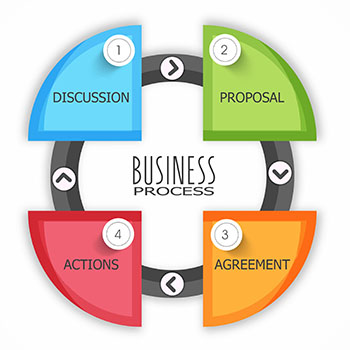
Our consultancy process always begins with an initial discussion between ourselves and your team. During this discussion, we talk about your goals and what you hope to achieve from the consultancy progress as well as the problems that you perceive in your business. At this time, we discuss with you how our team can assist you to achieve your target aims and verbally agree with a plan for going forward.
Once we have passed this stage, we will then supply you with our formal written proposal in which all your project objectives are outlined together with our planned approach to achieve them. In this written proposal, we will also clearly outline our terms of business and our fees so that you will have complete transparency.
If you are happy with our proposal, you can then agree to it, and we will finalise our arrangement. We will then offer you our consultancy support, adhering to the written proposal which you will have received. We will offer you the required help and support that you need to achieve your outlined goals, with regular progress reviews being conducted at interviews to ensure that we are on track to hit your targets.
If you are ready to benefit from our experience, enthusiasm and vision, contact our team today and find out how we can help your business to grow and thrive.